

 Facebook
 X
X
 Pinterest
 Copy Link
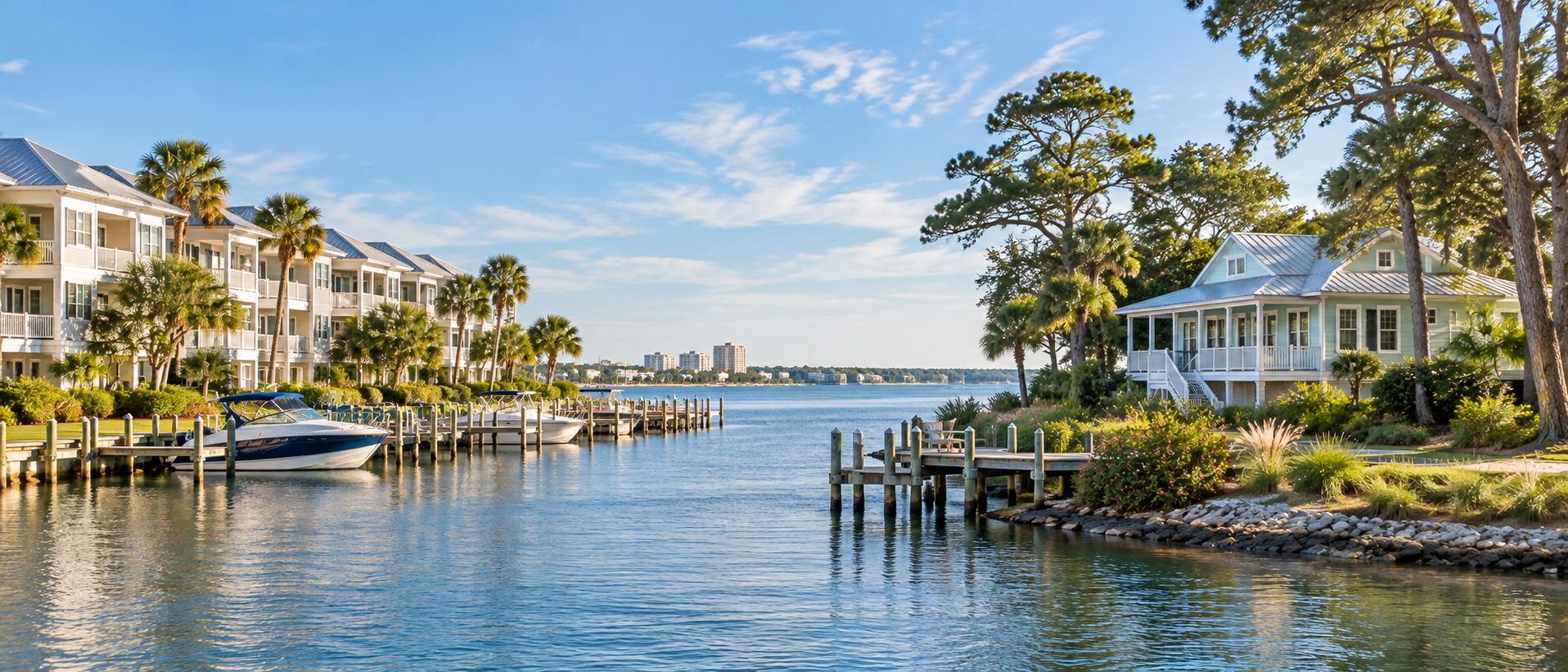
Owning coastal property for a while changes the way you look at it.
When you bought, you may have been thinking about the view, rental potential, weekends at the beach, or simply having a place of your own on the Emerald Coast.
Years later, the questions can be different.
Maybe the property has appreciated.
Maybe the expenses have gone up.
Maybe you use it differently than you expected.
Or maybe you’ve simply reached the point where you’re wondering whether you’d rather own something else.
When that happens, one of the first questions is usually:
What could I sell this property for?
That’s an important number.
But it isn’t the only one that matters.
If you’re selling one coastal property with the intention of buying another, I think the better question is:
What do I want the next property to do better?
Start With Why You’re Considering a Change
There doesn’t have to be something wrong with a property for it to stop being the right property.
I’ve seen owners’ priorities change for all kinds of reasons.
A vacation rental that made sense ten years ago may require more management than they want today.
A condo that was easy to own may now have association expenses that change the numbers.
A family may have bought primarily for rental income and now want a place they can use more themselves.
Or an owner may simply have enough equity to consider moving into a different type of property.
Before you start looking at what you can buy next, understand why you’re ready to leave what you already have.
That answer should guide the rest of the decision.
Look at What the Property Really Costs You
Purchase price gets a lot of attention.
Ownership cost deserves just as much.
Along the Emerald Coast, that can include:
- insurance
- HOA or condominium fees
- maintenance
- property management
- utilities
- repairs
- storm preparation
- assessments
- financing costs
If the property is rented, then rental income belongs in the conversation too.
Don’t look at one side of the ledger.
A property producing strong gross rental income may look impressive until you account for what it costs to own and operate.
Likewise, a property producing less income may still be doing exactly what its owner wants if personal use is the priority.
If you’re trying to understand that balance, I’ve written more about what makes a vacation rental property successful on the Emerald Coast.
Don’t Let Equity Make the Decision for You
Seeing how much a property has appreciated can make selling tempting.
But equity tells you what you’ve built.
It doesn’t tell you what you should do next.
Suppose you sell a Destin condo that has appreciated considerably. Buying another property simply because you now have more purchasing power doesn’t necessarily improve your position.
You still need to ask:
- Will the next property cost more to insure?
- Will it require more maintenance?
- Does it have better rental potential?
- Will you actually use it more?
- Does the location fit your plans five or ten years from now?
- Are you trading one set of headaches for another?
The goal isn’t necessarily to own more property.
The goal is to own property that works better for what you’re trying to accomplish.
Decide What “Better” Means Before You Start Shopping
This sounds simple.
It isn’t always.
Better could mean:
More income.
Or less maintenance.
Better water access.
More personal use.
Fewer rental turnovers.
A quieter location.
No stairs.
A garage.
Room for the grandchildren.
A property closer to restaurants and activities.
Or one farther away from all of it.
I’ve been in real estate long enough to know that the answer changes as people’s lives change.
That’s why I wouldn’t begin a replacement-property search with a list of bedrooms and bathrooms.
I’d begin with:
What isn’t working about the property you own now?
Then let’s make sure we don’t buy the same problem in a different location.
Sometimes the Best Move Is From Investment Toward Lifestyle
Not every coastal property owner wants to maximize rental income forever.
I’ve seen priorities shift.
A property that started as an investment can eventually become more about family.
Owners may decide they’d rather block off more weeks for themselves. They may be thinking about retirement. Children and grandchildren may be using the property more often.
At that point, the spreadsheet isn’t the whole story.
I wrote about this from the other direction in Is a Vacation Home Still Worth It If You Don’t Rent It Out?
There’s financial return.
And then there’s the return you get from actually enjoying what you own.
Both can matter.
And Sometimes the Property Needs to Work Harder
The opposite happens too.
An owner may have enjoyed a property personally for years and decide the next one needs to make more financial sense.
That’s when we need to look beyond the pretty pictures.
Rental demand.
Operating costs.
Association restrictions.
Insurance.
Property management.
Condition.
Location.
Resale.
Those things may not be nearly as exciting as the Gulf view, but they’re part of the property you’re buying.
This is where experience helps.
Not because anyone can predict exactly what a property will do.
We can’t.
But we can ask better questions before you own it.
If a 1031 Exchange Might Be Involved, Start Early
For owners of qualifying investment real estate, selling one property and acquiring another may raise the possibility of a 1031 exchange.
That’s a conversation to have before the sale is completed, not afterward.
There are qualification rules, strict timelines and specific requirements for how an exchange is handled.
I’ve put together a separate guide explaining 1031 exchanges on the Emerald Coast and what property owners need to know.
Your tax advisor, attorney and qualified intermediary should advise you on whether an exchange works for your circumstances.
My part is the real estate.
What are you selling?
What’s available to replace it?
And does that replacement actually move you toward what you’re trying to accomplish?
Don’t Buy the Next Property Just Because It’s Different
This may be the most important point in the article.
Once owners decide they’re ready for a change, it’s easy to swing too far in the opposite direction.
Tired of condominium fees?
Suddenly a detached house looks perfect.
Until you remember that you’re now responsible for the roof, yard, exterior maintenance and everything else the association used to handle.
Tired of managing vacation renters?
A property you don’t plan to rent may sound ideal.
But does the ownership cost still make sense without rental income?
Want better water access?
Make sure you’ve looked at the insurance, maintenance and other realities that come with that particular property.
Every property has tradeoffs.
The objective isn’t finding one without them.
It’s choosing the tradeoffs you’d rather live with.
Think About the Property Five Years From Now
I like to take the decision farther down the road.
Not just:
Will I enjoy this property next summer?
But:
Will this property still make sense five years from now?
Think about how your family may use it.
How much maintenance you’re willing to handle.
Whether rental income will remain important.
Whether retirement is getting closer.
Whether you want something that can eventually become a primary residence.
And think about resale.
You don’t have to buy for the next owner.
But you should understand what may make the property attractive—or difficult—when your own plans change again.
Quick Answers About Selling One Coastal Property to Buy Another
Should I sell my current property before looking for another one?
Not necessarily. In fact, understanding what’s available before selling can help you decide whether making a change makes sense at all. If a 1031 exchange is being considered, timing becomes particularly important.
Should I sell a vacation rental if expenses have increased?
Higher expenses are one factor, not the entire decision. Look at income, total ownership costs, equity, future plans and what alternatives are realistically available.
Is a more expensive coastal property necessarily a better investment?
No. Purchase price alone doesn’t determine how well a property fits your investment or lifestyle goals.
Should I buy another vacation rental after selling mine?
Only if a vacation rental still fits what you’re trying to accomplish. Your next property doesn’t have to serve the same purpose as the one you’re selling.
What should I consider before buying the replacement property?
Look beyond price and location to insurance, maintenance, association expenses, rental rules, management requirements, intended personal use and long-term resale considerations.
Final Thoughts
Selling a coastal property can feel like the end of a decision.
Often, it’s really the beginning of the next one.
Yes, I want to know what your current property is worth.
But I also want to know why you’re thinking about selling it.
What has changed?
What would you like to be different?
And what would make the next property a better fit than the one you already own?
Those answers tell us far more than the sale price alone.
If you own property in Destin, Fort Walton Beach, Okaloosa Island or elsewhere along the Emerald Coast and you’re wondering whether it’s time to make a change, I’m always happy to talk through it.
No pressure. No pitch.
Sometimes you just need to figure out what the next move should accomplish before you make it.
Wayne Myshin
No mission is impossible.
