

 Facebook
 X
X
 Pinterest
 Copy Link
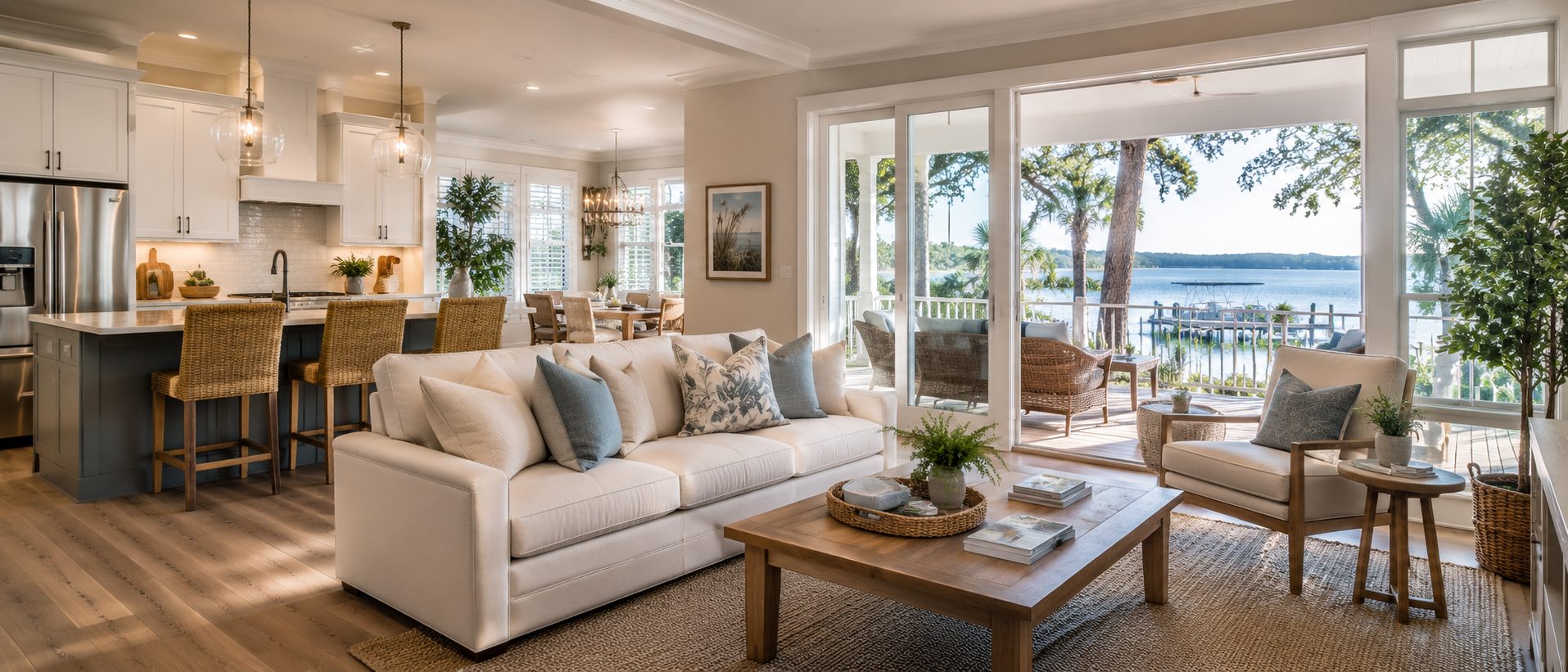
There’s a difference between a home that photographs well and one that lives well. Right now, a lot of buyers are chasing the same features — open-concept kitchens, spa-style bathrooms, outdoor entertaining spaces. And honestly, some of those are worth having. But others are things people stop noticing after six months and barely think about by year two.
If you’re weighing your options in this market, it helps to step back and ask a simple question: Will I still love this five or ten years from now? Here’s how to think through some of the most common features buyers ask about today.
Open Layouts: Still Popular, But Not Always Practical
The open floor plan had a long run as the most-wanted feature in American homes, and it’s still near the top for many buyers. The appeal is real: natural light flows, families can stay connected, and the space feels bigger than the square footage suggests.
What buyers don’t always consider is the tradeoff. Open layouts mean noise travels. Cooking smells travel. If someone’s on a video call and someone else is making dinner, those two things are happening in the same room. Families with young kids often find they want more defined spaces as time goes on, not fewer.
The layouts that tend to age well are ones that balance openness with some separation. A kitchen open to a living or dining area is genuinely useful. A house where there’s no quiet room to close a door and think can wear on people over time.
Storage: Boring to Talk About, Critical to Live With
Storage never goes out of style. Yet it’s one of the most undervalued features at the time of purchase. Buyers touring a home are focused on finishes and light and layout. They’re not counting closets.
That’s a mistake. How a home functions day to day has a lot to do with where things go. Linen closets, pantry space, a mudroom or drop zone near the entry, garage storage, attic access — these are the things that quietly make life easier for years. A beautifully renovated kitchen with no pantry will frustrate you in ways a slightly dated kitchen with great storage won’t.
If you’re buying, walk through with storage in mind. If you’re selling, know that buyers who think carefully will notice what’s there.
Outdoor Living: Real Value, With Some Caveats
Covered patios, outdoor kitchens, fire pits, and screened porches are genuinely popular right now, and for good reason. People use their outdoor spaces more than they used to, and a well-designed outdoor area adds usable square footage to a home.
The long-term value here depends on your climate and your habits. A screened porch in a humid southern climate gets used constantly. An elaborate outdoor kitchen in a region where it snows six months a year may sit unused for half the year. Think honestly about how you actually live before paying a premium for outdoor features that don’t match your lifestyle.
That becomes especially important when you’re considering a second home. Features that look perfect during a week at the beach may feel very different once you’re responsible for maintaining them year-round. If that’s part of your search, I go into those broader considerations in Buying a Second Home on the Emerald Coast: What Buyers Need to Know.
Simple, well-built outdoor space tends to hold its value better than complex setups with appliances and systems that can fail, need maintenance, or become dated.
Energy Efficiency: One of the Few Trends That’s Also Timeless
This is an area where what’s popular today and what holds long-term value happen to line up. Energy-efficient windows, good insulation, quality HVAC systems, and smart thermostats all reduce monthly costs and tend to remain relevant as utility costs rise over time.
Solar panels are worth a separate conversation because they’re not universally a good investment. The value depends on your utility rates, roof orientation, local incentives, and how long you plan to stay. But the underlying principle — lower operating costs, reduced dependence on the grid — is a sound one regardless of how the technology evolves.
When you’re looking at homes, pay attention to utility bills, the age of the HVAC system, and the quality of windows and insulation. These aren’t exciting topics, but they affect your monthly budget for as long as you own the home.
Flexible Space: More Valuable Than It Used to Be
The ability to use a room for different purposes over time has become genuinely important. A bonus room, a finished basement, a detached garage with a workable footprint — these spaces can serve as a home office today, a playroom in a few years, and a guest suite after that.
Homes with at least one flexible-use room tend to adapt better to the way life changes. Families grow and shrink. Work-from-home situations come and go. Having a space that can shift with your needs is worth more than most buyers realize when they’re first shopping.
Location and Neighborhood: Still the Foundation
Nothing on this list matters as much as where the home sits. Location is the one thing that can’t be changed, renovated, or added on to.
That’s especially true in Northwest Florida, where two homes that aren’t very far apart can offer very different ownership experiences. Proximity to the Gulf or bay, flood considerations, access to Eglin or Hurlburt, tourist traffic, established neighborhoods versus vacation-oriented areas, and even the route you take across town can matter long after you’ve stopped noticing the countertops.
When evaluating a neighborhood, look beyond aesthetics. What’s the school situation, even if you don’t have kids? School zones can influence buyer demand and resale considerations, even for buyers who don’t have school-age children. What’s walkable? Are there parks, grocery options, or transit nearby? How long does the commute actually take during real-world traffic hours?
For military families, that question can take on even more importance when you’re balancing a commute to Eglin AFB or Hurlburt Field with the neighborhood and lifestyle you want. I’ve covered some of those considerations in my guide to military relocation to Fort Walton Beach and Eglin AFB.
Neighborhood trajectory matters too. It’s also worth paying attention to how an area has been changing over time. Areas with deferred maintenance on a lot of homes, declining retail, or infrastructure issues can be hard to time correctly. This doesn’t mean you should only buy in established, expensive neighborhoods — but it means going in with your eyes open about what’s happening around a home, not just what’s happening inside it.
And that’s one reason I tell buyers not to evaluate a home from listing photos alone. Some of the things that matter most only become clear when you’re standing in the house, walking the property, and paying attention to what’s around it.
Closing Thoughts
Buying a home involves real money and a long time horizon. The features that are popular in listings and on renovation shows are popular for a reason — they’re genuinely appealing. But the homes people are happiest with ten years later are usually the ones that work well for how their owners actually live.
Think about your habits, your family’s likely changes, and which features will still matter after the novelty wears off. The shiny kitchen tile and the statement light fixture may be what you notice on a tour, but the storage, the layout, the neighborhood, and the utility costs are what you’ll think about every day.
If you’re looking at homes in Fort Walton Beach, Destin, or elsewhere along the Emerald Coast and wondering which features are worth paying for — and which ones probably aren’t — I’m always happy to talk it through. No pressure. Just a conversation.
Wayne Myshin
No mission is impossible.
