

 Facebook
 X
X
 Pinterest
 Copy Link
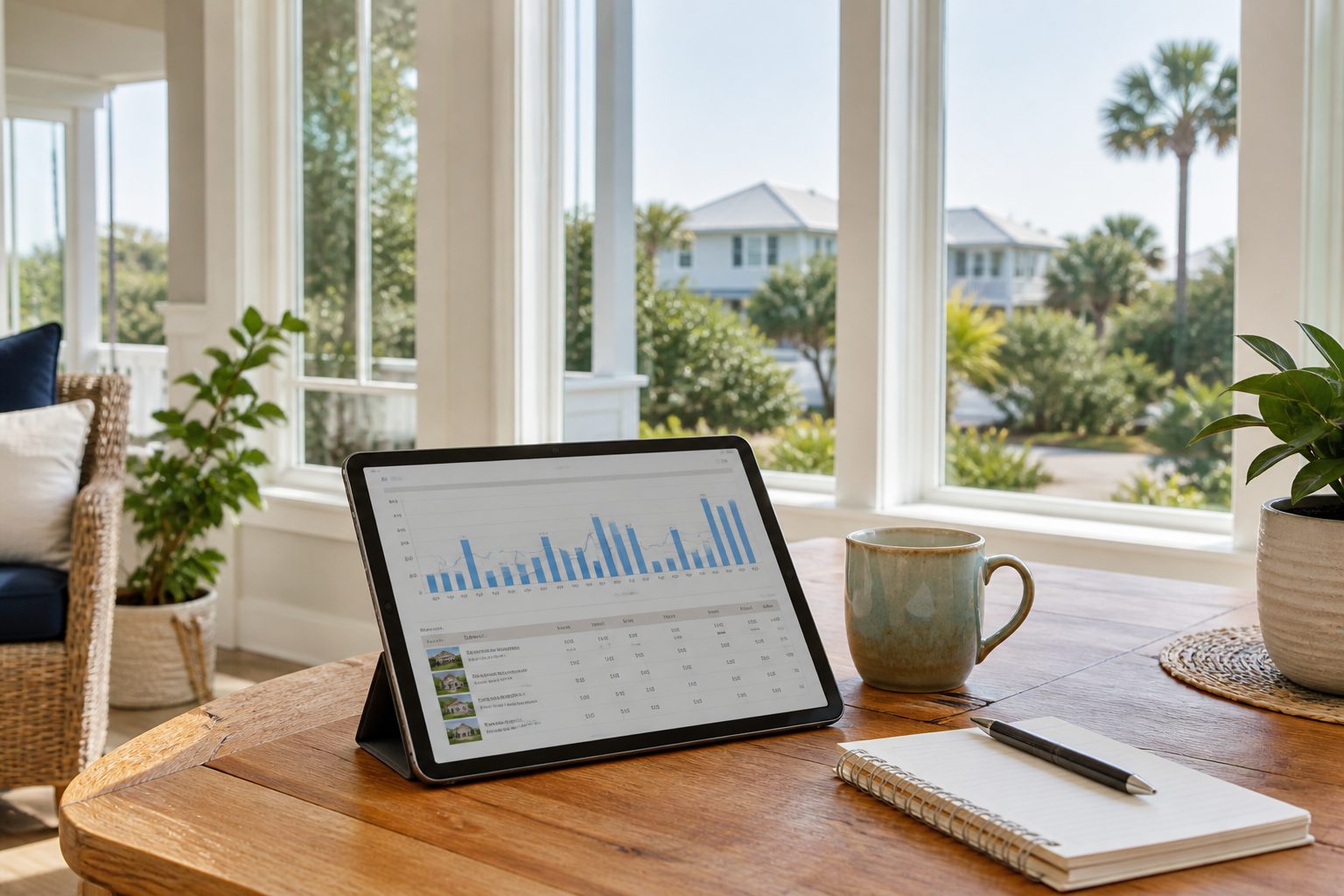
Real estate decisions shouldn’t feel like guesswork.
But for many buyers and sellers, that’s exactly what it becomes —
conflicting advice, unclear pricing, and uncertainty about what the numbers actually mean.
Whether you’re buying a primary home, a second home, or an investment property, having a clear understanding of the data behind the decision makes everything more manageable.
What “Data-Driven” Really Means in Real Estate
Data-driven real estate isn’t about spreadsheets for the sake of it.
It’s about understanding:
• current market conditions
• realistic pricing
• long-term property value
• potential return on investment
• timing — when to act and when to wait
In Northwest Florida, those factors can vary significantly between Fort Walton Beach, Destin, Niceville, and Navarre.
What works in one market doesn’t always apply to another.
Why Many Buyers and Sellers Feel Uncertain
Most people don’t make real estate decisions every day.
So when it’s time to buy or sell, it’s easy to feel unsure about:
• whether a home is priced correctly
• how much to offer (or accept)
• whether the timing is right
• what kind of long-term value the property holds
That uncertainty often leads to hesitation — or worse, rushed decisions.
Understanding the numbers helps remove that pressure.
Turning Market Data Into Clear Decisions
After more than four decades working in Northwest Florida real estate, I’ve found that the goal isn’t to overwhelm clients with data.
It’s to simplify it.
That usually means focusing on a few key things:
• what similar properties are actually selling for
• how long homes are staying on the market
• how pricing affects buyer activity
• how the property fits long-term goals
When those pieces are clear, decisions become much easier.
If you’re comparing different types of properties — especially along the coast — it can also help to understand how investment-focused decisions differ from traditional home buying. (link to future investment/ROI post if created)
Local Insight Still Matters
Data is important.
But it only works when it’s paired with local knowledge.
The Emerald Coast isn’t one uniform market. It’s a collection of smaller, distinct areas — each with its own patterns.
Understanding:
• neighborhood demand
• school zones
• proximity to water or base
• long-term development trends
adds context to the numbers.
That’s what turns data into something useful.
A Practical Approach to Real Estate Decisions
For most people, the goal isn’t to become an expert in market analytics.
It’s to feel confident about the decision they’re making.
That comes from:
• clear explanations
• honest expectations
• steady communication
• and a realistic look at both opportunity and risk
If you’re also navigating a more complex situation — such as inherited property — understanding how probate real estate works in Northwest Florida can be just as important when evaluating value and timing.
👉 (internal link to cornerstone)
Confidence Comes From Clarity
Real estate decisions are rarely small.
But they don’t have to feel uncertain.
With the right information — and the right interpretation of that information — buyers and sellers can move forward with clarity instead of second-guessing.
That’s where data becomes valuable.
Not as noise.
But as direction.
Wayne Myshin
No mission is impossible.
